

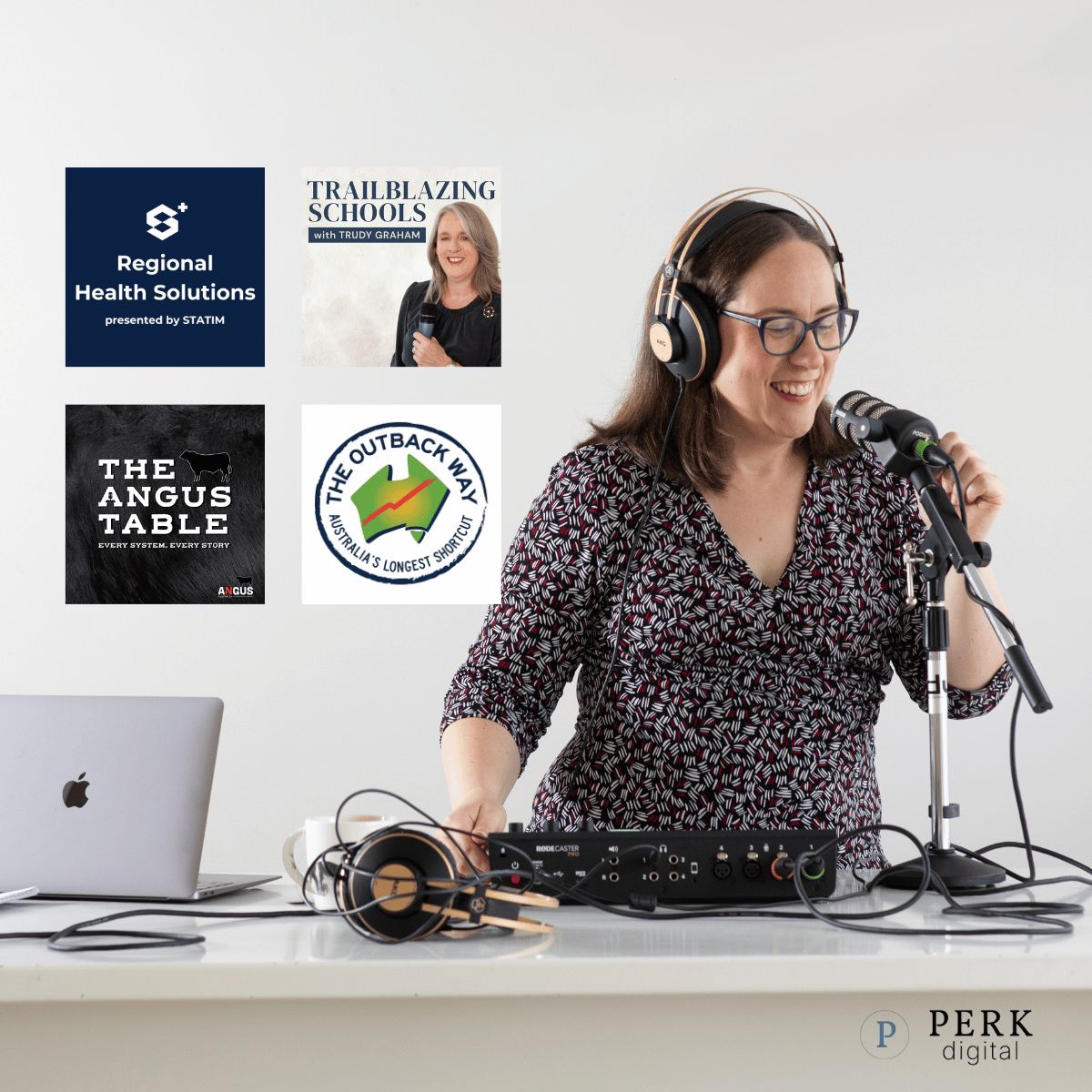
PERK Digital helps regional organisations use podcasting as accessible storytelling and knowledge-sharing infrastructure for niche communities separated by distance. Through my Deep Niche Podcast System, I work with organisations to create podcasts that do more than promote services: they help people in regional, rural and remote communities tell their own stories, connect with peers facing similar challenges, and build a reusable archive of practical knowledge.
Podcasting is a strategic fit for regional audiences because it is portable, low-bandwidth and downloadable for offline listening. For people living and working in areas with patchy connectivity, long drives and limited access to in-person networks, that matters. It means useful content can travel with them and fit the rhythms of regional life.
This case study brings together four examples across different sectors but with a shared regional purpose. Regional Health Solutions connects healthcare leaders around workforce, service delivery and innovation in regional health. Trailblazing Schools supports teaching principals and small school leaders in rural and remote communities with practical advice and peer stories. The Angus Table helps Angus Australia engage members and share producer stories and industry knowledge in a format that suits agricultural life. The Outback Way Podcast documents the stories of people and organisations along the Outback Way while also supporting awareness of the 2,700km road sealing project.
Across all four, the common thread is not the industry but the audience: people in regional communities who face distance, isolation and limited opportunities to connect in person. These podcasts help make local knowledge more portable, more shareable and more human.
This project has impacted regional communities by helping niche audiences separated by distance, patchy connectivity and professional isolation access stories, ideas and expertise relevant to their work and lives.
Across these four podcasts, the impact is not only promotional; it is about connection, visibility and knowledge-sharing. Regional Health Solutions has created a platform where healthcare leaders can hear practical examples of innovation and service delivery from others working in regional contexts, and it has already prompted listener requests for introductions to guests and conversations with facilities wanting to be part of solutions. Trailblazing Schools has created a dedicated space for teaching principals and small school leaders whose roles are often overlooked in mainstream education conversations. The Angus Table has given Angus Australia a more personal and engaging way to communicate with members while documenting producer stories and industry knowledge. The Outback Way Podcast has built a long-running audio library of stories, travel advice and project updates that help travellers and communities better understand the people, places and purpose connected to the Outback Way.
A key part of the impact is accessibility. Podcasts are low-bandwidth, downloadable and easy to listen to while driving, travelling between towns, working outdoors or away from a desk, making them especially valuable in regional and remote areas where internet and phone reception may be inconsistent.
This model also helps fill a widening media gap in regional Australia. As local newspapers, radio services and other mainstream media options shrink, there are fewer places for regional audiences to hear nuanced long-form stories about the issues, industries, people and places shaping their daily lives. These podcasts help meet that need by giving regional organisations an owned channel to share locally relevant stories and practical knowledge in a format grounded in the realities of regional life.
At a broader level, the project demonstrates a repeatable model for how regional organisations can reduce silos, preserve local knowledge and strengthen community connection through an owned archive of stories and conversations.