
The Young Artists Centre is a two-month program that helps young people turn a creative passion – from pottery to crochet to handmade goods – into a viable local business. Many young people in regional communities have real creative talent but no pathway to turn it into income or independence. The program exists to build that pathway. It runs across five stages.
First, structured training and workshops. Each week, young artists attend structured sessions where they learn the fundamentals of building a business – how to price their work, understand their customers, build a brand, and manage money. By the end, each young person understands how to turn their craft into a sustainable venture rather than just a hobby.
Second, mentorship. We match every young person with an artist-in-residence – a working creative who has built their own enterprise. These mentors train them in both their craft and the realities of running a creative business. This relationship gives young artists something rare in the regions: direct access to someone who has walked the path before them.
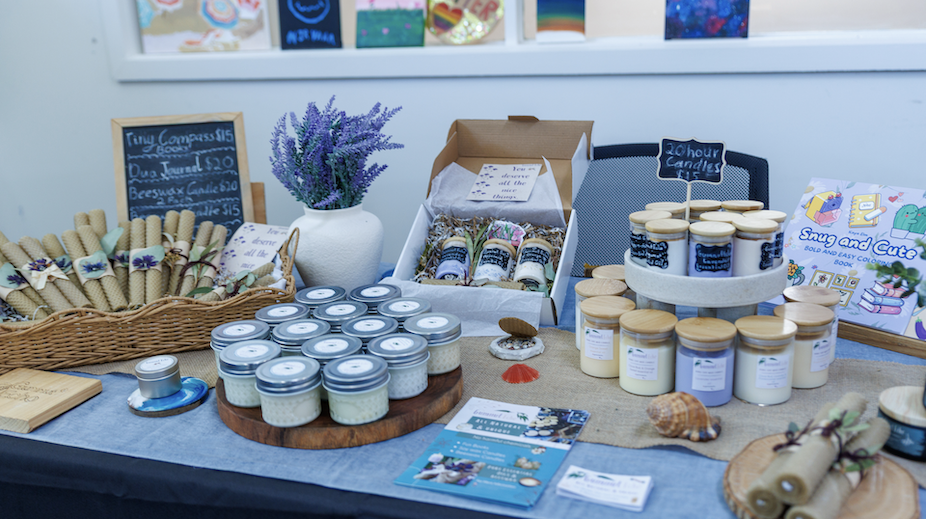
Third, a community showcase. We host a local event where young artists get their first real exposure to customers, selling their work directly to their community. The event culminates in a market stall showcase and live auction, giving them the experience of pitching and selling under real conditions. It is often the first time these young people see their creativity valued in dollars – a powerful moment of confidence and validation.
Fourth, we provide grant funding and support. We provide direct funding so young artists can purchase supplies, cover startup costs, or launch and scale their businesses. This removes the financial barrier that stops most young people in low-income communities from ever starting. The grants are modest but catalytic, turning an idea into a trading business.
Fifth, market access. We partner with local shopping centres and festivals to give young artists free physical retail space to set up their stores and sell their goods. This puts their products in the heart of their own community, in high-footfall spaces they could never otherwise afford. It connects them directly to local customers and gives their venture a genuine commercial footing.
The Young Artists Centre has strengthened its community on three levels: the young people at its heart, the local economy they now contribute to, and the wider community that came out to support them.
First, it transformed the young artists themselves. At the start, only 7% had a clear business plan for their art; by the end, 75% did — the difference between talent that stays a hobby and talent that becomes a livelihood. Every participant finished as a trading business owner: 100% were actively selling their work, up from 53.8%. As one reflected, "This program gave me the support I needed to launch my business. I wouldn't have been able to do it myself — I would have overthought the whole thing and never done it."
Second, it fed directly into the local economy. By its close, nearly 9 in 10 participants (88%) were trading in real markets, festivals and shopping centres, and the number earning more than $500 from their art tripled. Those describing their finances as "good" more than quadrupled, from 15.4% to 62.5%. By securing over 30 free stalls and storefronts, we removed almost $10,000 of hiring costs as a barrier so young people could keep trading long after the program ended. Every dollar they earn stays in their own region, and every dollar the community spends flows directly to a local young maker — keeping income, talent and opportunity circulating locally rather than draining out.
Third, it drew the whole community in. Across five festivals — from Mickleham, the Whittlesea Festival to Carols by Candlelight — over 20,000 people saw, celebrated and bought from these young artists, while coverage in the Star Weekly reached an estimated 36,000 readers. For young people who so often go unseen, this was an entire community choosing to show up for them. Before the program, only 7% felt connected to other young artists; afterwards, 75% did. As one put it: "Coming from an Asian household, the level of support was refreshing. I just never imagined there was a place like this I could be a part of."
The lasting impact is a shift in how the community sees its young people — not as recipients of support, but as makers, traders and contributors to its economic and cultural life. The program turned private passions into public businesses, isolation into belonging, and self-doubt into confidence and because it all stays rooted locally, its impact will keep compounding long after the program ends.